
This is the second piece in our three-part series drawn from a conversation between our CEO, Terry Lewis, and Dave Sutton, founder of the MSP marketing agency Wingman. The first article covered why Dave believes MSPs need to fix their sales approach before they spend on marketing. This one picks up where the conversation turned toward marketing itself:
-
How referrals actually work,
-
How a marketing funnel fits together,
-
Why AI has become one of the more useful doors MSPs currently have for starting a conversation with a stranger.
Click here for Part 1 and Part 3.
Referral programmes rarely do what people hope
Referrals should remain the strongest source of new business for most MSPs, in Dave's view, because a referred prospect arrives with an existing level of trust and tends to close far faster than a cold lead. The problem is that referrals alone are more a by-product of running a decent business than a growth strategy in their own right, and Terry found that out once he needed to grow 3Gi faster than word of mouth could carry it.
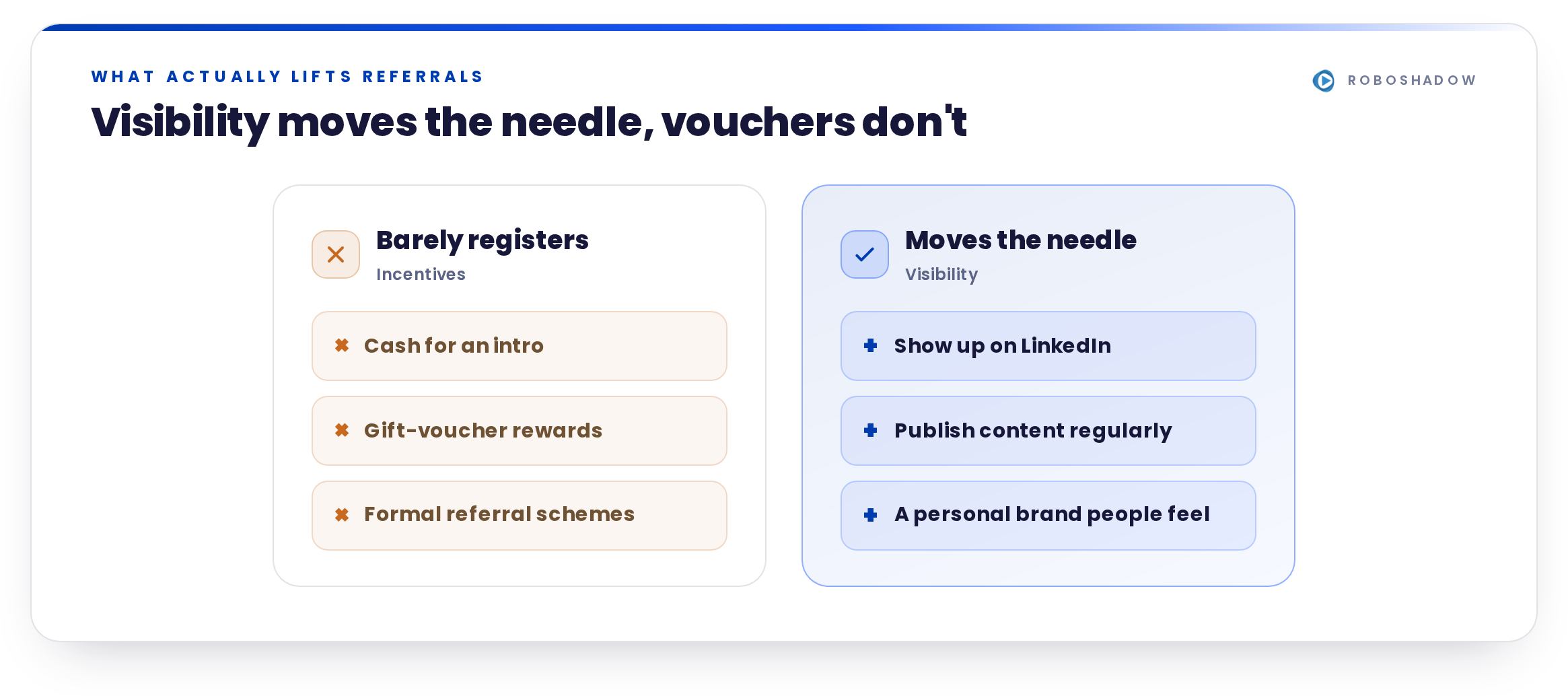
Dave is also sceptical that formal referral incentives change much. Offering a voucher or a reward for an introduction, in his experience, rarely moves the needle, even in the US market where the idea is more culturally familiar than it is in the UK. People refer a business when a friend happens to ask who they use, not because of a prize attached to the introduction. What does seem to influence referral rates, based on what he's observed with clients, is simple visibility: showing up more often on LinkedIn, producing content, and building something of a personal brand around the people in the business. One of his clients couldn't explain why referrals had picked up after years of staying flat, until they realised it lined up with when they'd started marketing more actively. Dave's read is that the decision to switch MSP is largely an emotional one, and it's much easier for a prospect to feel an emotional connection to a visible person than to an anonymous company name.
Matching effort to where a prospect sits in the funnel
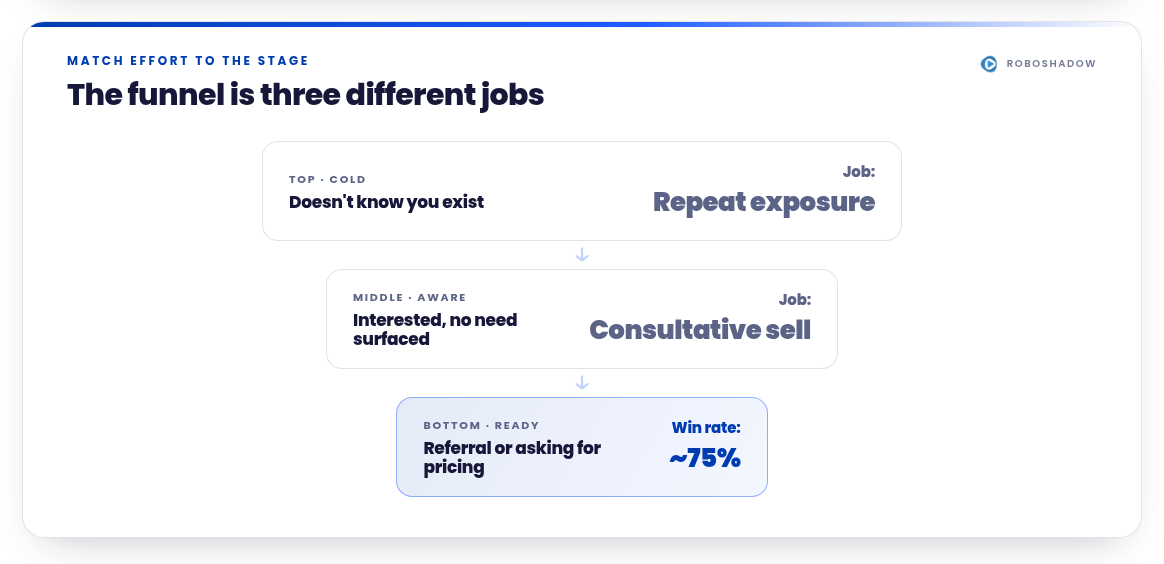
Dave describes the marketing funnel in three rough bands, and argues that a lot of the confusion MSP owners have about marketing comes from treating all of it the same way. At the bottom sits the point closest to a decision: a referral, or anyone who's already told you they have a specific need and want pricing. Dave reckons MSPs can expect to win perhaps three-quarters of the opportunities that arrive this warm. In the middle sits everyone who's shown some appetite or awareness but hasn't yet had the conversation that surfaces a specific opportunity; this is where a good, consultative salesperson earns their keep, helping a prospect recognise a problem and consider a solution for it. At the top sits everyone who doesn't know the business exists at all, and who needs sustained, repeated exposure before they'll trust it enough to engage.
That repetition matters more than it once did. Dave references the old marketing rule of thumb that a prospect needs to encounter a business somewhere around seven times before they act, a figure that dates back to 1930s Hollywood, though he suspects the real number today is considerably higher given how much competing noise everyone is exposed to. The practical implication is that MSPs shouldn't expect a single channel or a single campaign to do the whole job. Visibility has to build across several channels and several months before it turns into anything resembling a lead.
What Separates inbound from outbound & why outbound has to lead
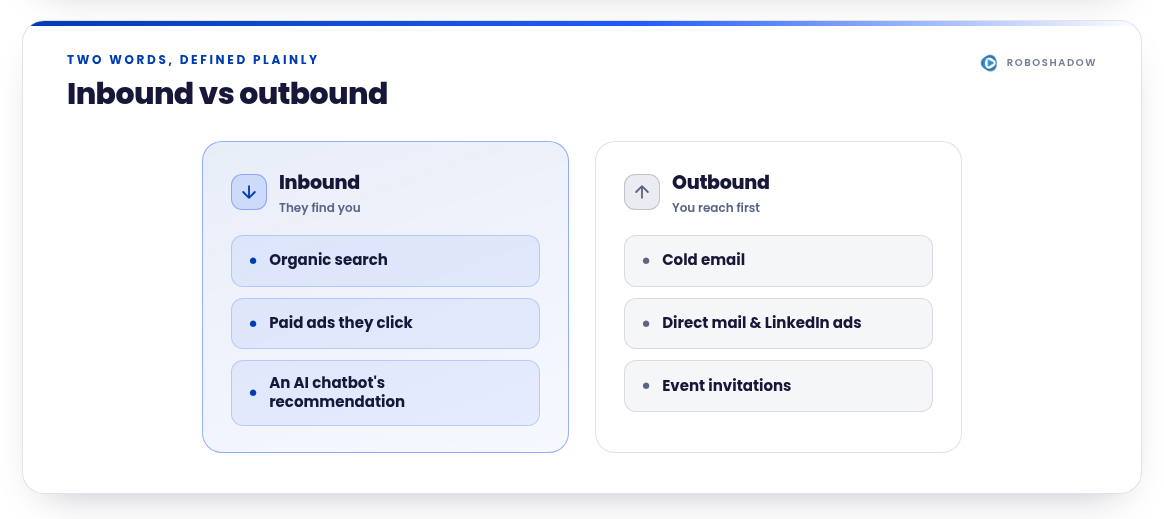
The two terms come up constantly in marketing conversations, and Dave takes care to define them plainly. Inbound is when someone finds an MSP on their own initiative, whether that's an organic search result, a paid ad they clicked, or increasingly, an answer volunteered by an AI chatbot when someone asks for local IT recommendations. Outbound is the opposite: the business reaching out first, through a cold email, a piece of direct mail, a LinkedIn ad, or an event invitation.
Dave's central argument, and one he returns to more than once, is that most businesses in an MSP's target market simply aren't looking for a new IT provider at any given moment, which means inbound tactics alone will always leave most of the addressable market untouched. He compares it to going to the doctor: nobody looks up a knee specialist until their knee actually hurts. The businesses that aren't actively searching are also, in his experience, the more valuable ones to land, because they tend to be stickier and less likely to switch providers every couple of years chasing price. Reaching them means showing up in their world before they have an active need, so that when a trigger event eventually arrives, whether that's a contract renewal, a security incident, or simply a slow build-up of frustration, the MSP is already someone they recognise.
Why AI has become an unusually good conversation starter
Both Terry and Dave pointed to AI as one of the more useful topics MSPs currently have for opening a cold conversation, for a reason that's a little unusual: most business owners want to know about AI before they've identified a specific problem it solves for them. That's a rarer position for a buyer to be in, and it gives MSPs an opening that doesn't require convincing someone they have a problem first.
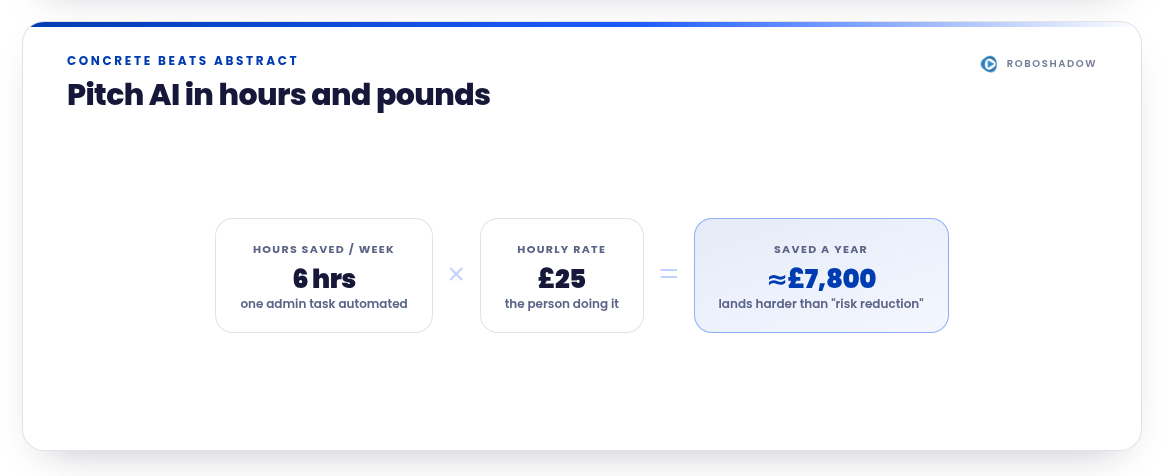
Dave's advice to MSP owners who feel underqualified to lead that conversation is that nobody, realistically, is an AI expert yet, given how recently most of this technology went mainstream. What MSPs already have, in his view, is a more useful qualification: a working knowledge of how their clients' businesses actually operate day to day, which is what lets them spot where AI might remove a specific, quantifiable bit of friction. He gives the example of framing a pitch around real numbers, such as the hours a week an admin role might save by automating a manual task, multiplied by that person's hourly rate. Concrete savings like that, in his experience, land with a business owner in a way that abstract talk about risk reduction or compliance never quite does.
That conversation tends to loop back to cybersecurity fairly quickly, and running RoboShadow gives Terry a useful vantage point on exactly why. Once a business owner starts engaging with what AI tools can do, the natural follow-up question is what their own staff might already be doing with AI without any oversight at all. This has become known in the security industry as shadow AI, and the gap it describes is real and growing. A WatchGuard global report published in mid-2026 found that nearly two-thirds of employees admit to using AI tools at work that their employer hasn't approved, a blind spot most organisations still lack the visibility to manage. Other studies published around the same time point to the same broad pattern even where the exact figure moves: Verizon's 2026 Data Breach Investigations Report found this kind of unsanctioned AI use had roughly quadrupled year over year, with close to half of employees now regular AI users on their work devices.
For an MSP, that gap is a second, closely related conversation sitting right next to the AI opportunity itself, covering data access, permissions, and governance. It's territory that sits squarely within skills most MSPs already have from their cybersecurity work rather than anything specifically new about AI. Terry mentioned that at 3Gi, both threads, AI enablement and AI governance, had become one of the largest sources of new growth for the MSP over the past year, which says something about how quickly this has moved from a niche interest to a mainstream client concern.
Turning curiosity into a paying relationship
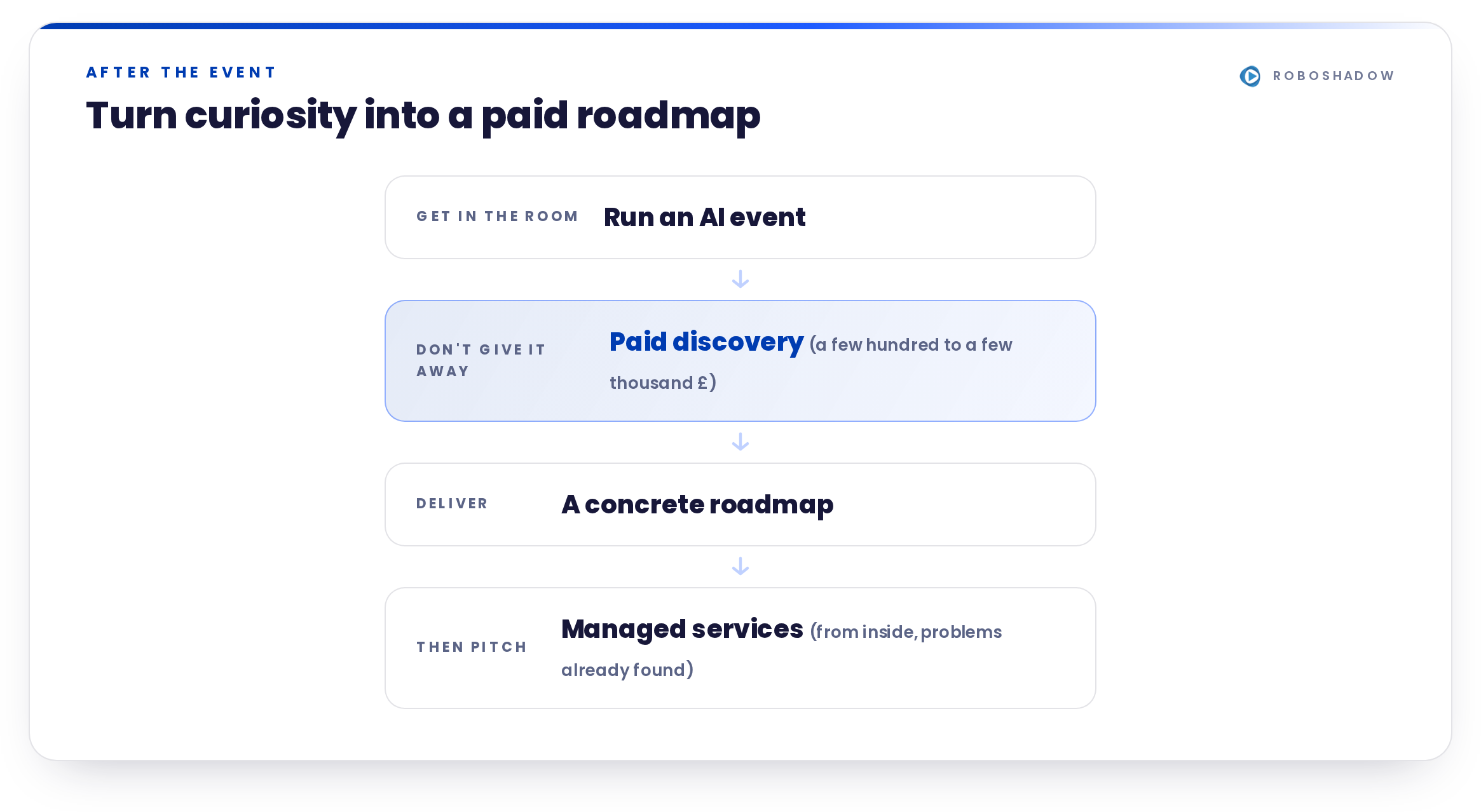
Getting someone curious about AI is one thing; turning that curiosity into revenue is another, and Dave's preferred mechanism is the in-person event. He described running sessions where he asks a room of business owners whether they have an AI policy, and almost no hands go up, followed by asking whether they know staff who use AI regardless, at which point most hands do. That gap, made visible in the room, tends to do more to convince an audience they need help than any amount of written marketing could.
The part Dave pushes MSPs hardest on is what happens after the event. His advice is to resist the urge to give the follow-up strategy away for free, since people tend to undervalue anything they haven't paid for. Instead, he recommends packaging a modest, paid discovery engagement, something in the range of a few hundred to a few thousand pounds, that results in a concrete roadmap for the prospect's business. That small paid project does two things at once: it gets money moving in the relationship sooner than a multi-year courtship toward a full managed services contract would, and it puts the MSP inside the business, seeing the gaps first-hand, before the bigger pitch for ongoing managed services ever comes up. By the time that conversation happens, the MSP has already found the problems and started fixing them, which is a very different position to be in than a stranger asking for a chance to pitch.
The next piece in this series gets into the numbers behind all of this: what a marketing budget should actually be spent on, how to think about the cost of winning a customer, and what to look for when bringing in outside help.
As always, we thank you for your ongoing support and feedback, and if you have any questions, please don’t hesitate to reach out to us at hello@roboshadow.com.
We'd also love to get your thoughts on this topic, so if there's anything you'd like to add or challenge, just email us at zaimalalmahomed@roboshadow.com or terrylewis@roboshadow.com - it's always a treat to hear back from you when we put out content like this.
