
This is the final piece in our three-part series drawn from a conversation between our CEO, Terry Lewis, and Dave Sutton, founder of the MSP marketing agency Wingman. The first two articles covered the sales groundwork MSPs need before they market at all, and the shape of the marketing funnel itself, including why AI has become such a useful conversation starter. This one covers the part most owners find hardest to pin down:
-
What any of this should actually cost,
-
How to think about bringing in help.
Click here for Part 1 and Part 2.
Why 'cost per lead' is close to a meaningless number
Dave is direct about one piece of advice: if anyone offers to sell an MSP a fixed price per lead, walk away. His reasoning is that genuinely warm, trust-built leads take real time and money to produce, and an agency selling them at a fixed unit price is almost certainly generating that same list of contacts for several MSPs at once rather than investing in one business's brand specifically. What gets sold as a "lead" in that context is really just a name and a loosely qualified level of interest, stripped of the relationship-building that makes a lead worth pursuing in the first place.
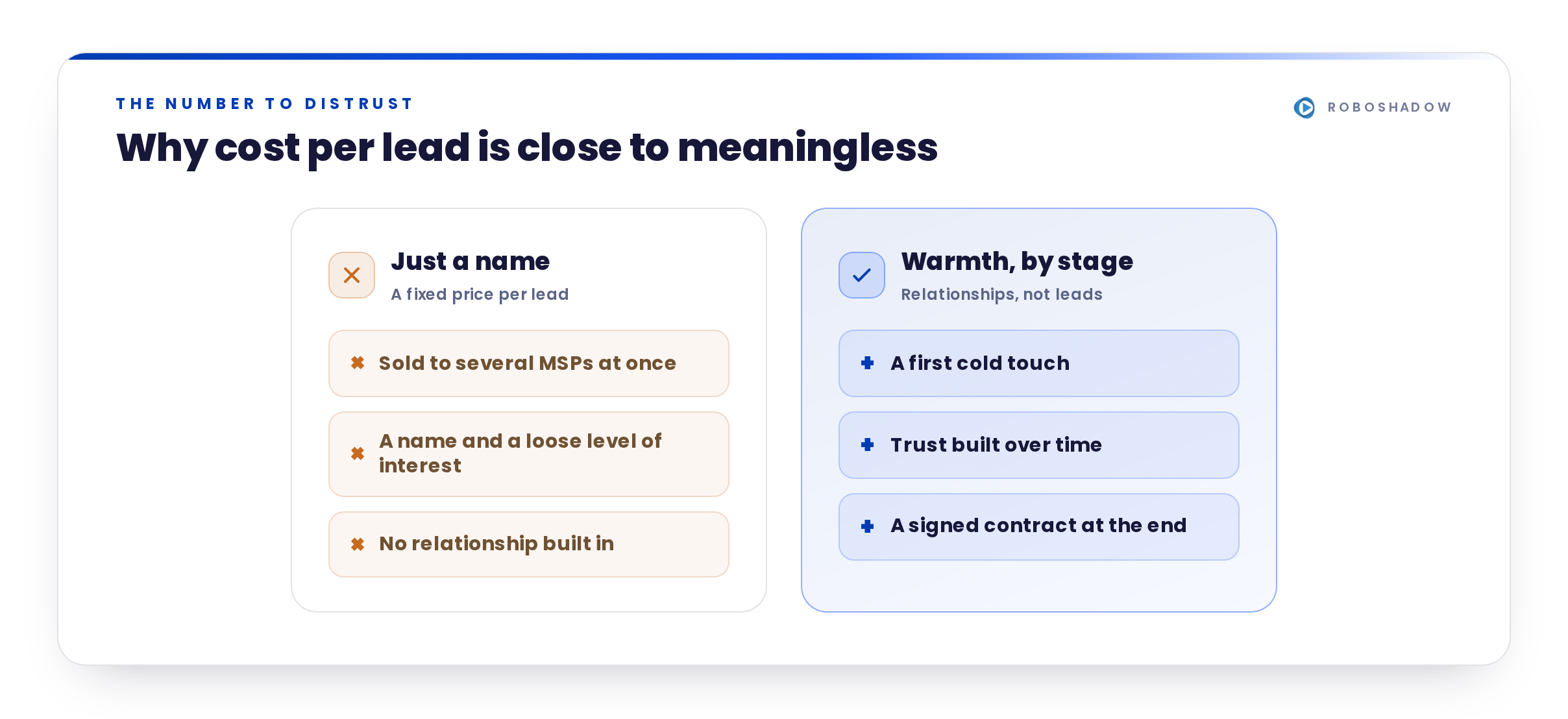
His preferred fix is to stop thinking in terms of leads altogether and think in terms of relationships at different stages of warmth. That's a harder thing to put a single price tag on, but it's a more honest description of what's really happening between a first cold touch and a signed contract.
Working out what a customer is worth
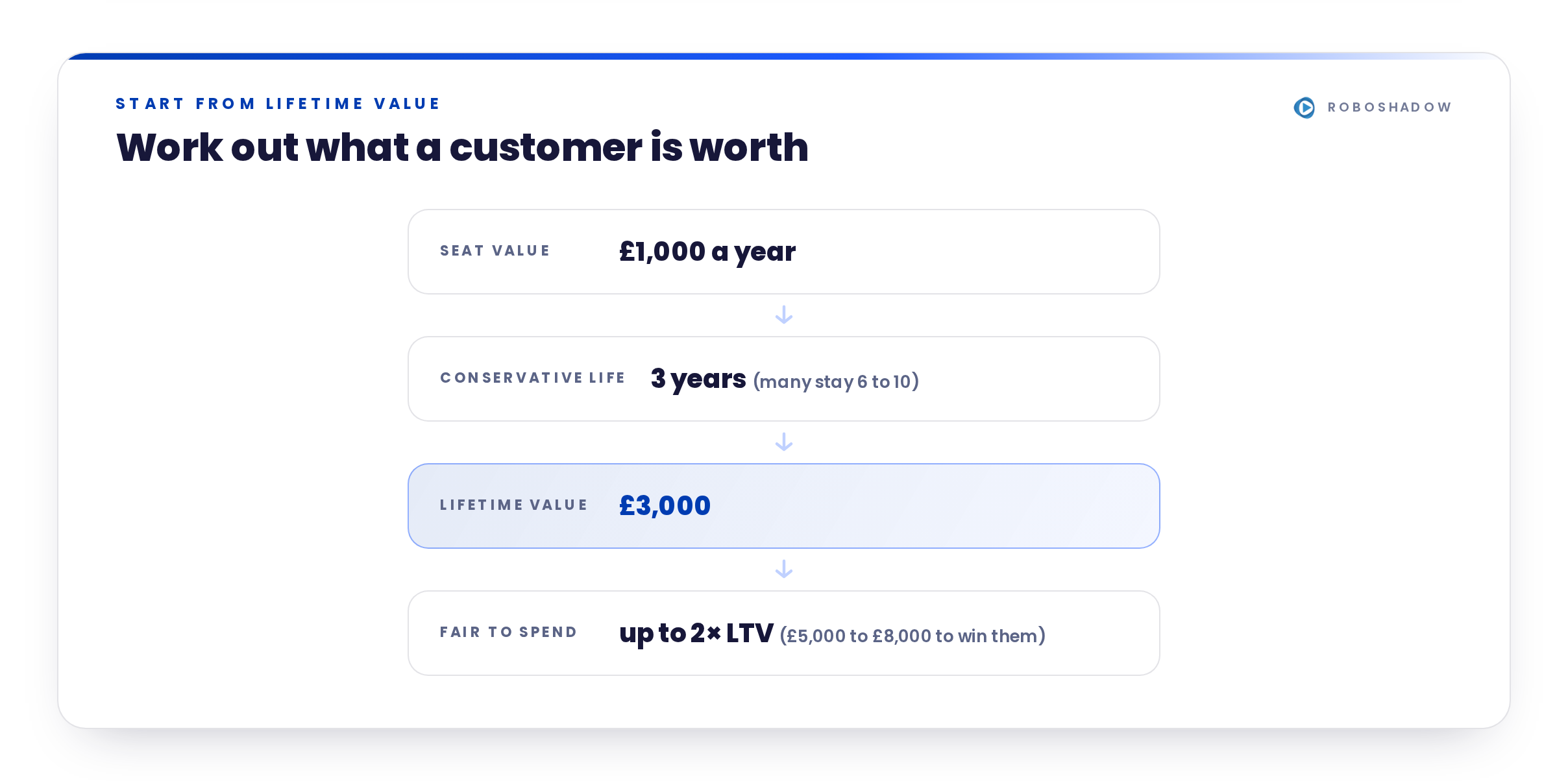
Rather than pricing a lead, Dave starts from the value of a customer over the full life of the relationship for lifetime value. Most MSPs retain clients for years, sometimes six to ten, but Dave suggests using a conservative estimate, say three years, for a rough calculation. If a seat is worth roughly £1,000 a year, three years of that seat is worth £3,000, and his argument is that an MSP should be comfortable spending up to double that lifetime figure to acquire the customer in the first place, since the investment gets recouped over time. In his experience, owners are often visibly startled when he suggests a reasonable cost of acquisition might run to £5,000 or £8,000 for a single customer, mostly because they've never worked out what a customer is actually worth to them, and any number sounds expensive without that reference point.
This comparison between lifetime value and cost of acquisition (LTV to CAC), isn't unique to the MSP world. It's standard vocabulary among venture investors and startup founders. A commonly cited rule of thumb, popularised across the software industry, holds that a healthy business should see roughly three pounds or dollars of lifetime value for every one spent on acquisition. The figure traces back to the investor David Skok, who set that 3:1 threshold around 2010 as the point below which a subscription business's underlying economics start to look shaky, based on observations of mature, publicly traded software companies.
Dave isn't suggesting MSPs need to hit exactly 3:1, since managed services and consumer software have different cost structures. His point is that most MSPs have never calculated their own ratio at all, and doing the exercise tends to be reassuring once it's done, since managed services typically enjoy far lower customer churn than many of the subscription businesses that popularised the metric in the first place.
The acquisition shortcut
There's a second, faster way to grow a customer base: buy another MSP outright. Dave acknowledges this is often the quickest route to scale, and it's become common enough that it's reshaping the industry. Market trackers that follow this closely put 2025 North American MSP deal volume at more than 450 completed transactions, up roughly a fifth on the year before, with disclosed transaction value above $4 billion and private equity funds actively deploying capital raised in prior years into the sector. Multiples paid for the strongest MSPs have moved with that activity. Where a quality MSP typically changed hands for something like four to six times EBITDA before 2020, the top tier of the market, businesses with strong recurring revenue and modern tooling, are now commonly reported in the low double digits, which is part of why buyers are often more interested in a target's seat count and customer retention than almost anything else about the business.
Both Terry and Dave express that they’re personally unconvinced this trend benefits the wider industry or its customers, even while acknowledging why it happens: organic marketing is hard, and buying an existing customer base sidesteps most of that difficulty. Terry was clear this is his own opinion rather than a settled fact, noting he's turned down chances to buy other MSPs himself and been approached about selling 3Gi more than once. Their shared view was that a lot of small MSPs that get acquired see meaningful customer churn afterward, since much of the loyalty in a small MSP relationship sits with the specific people a customer has come to know, not the brand on the invoice. For an owner without the capital to acquire competitors, the more useful way to read this is that some of that post-acquisition churn eventually becomes available to whoever's left doing consistent, patient organic marketing.
Putting a number on the monthly marketing budget
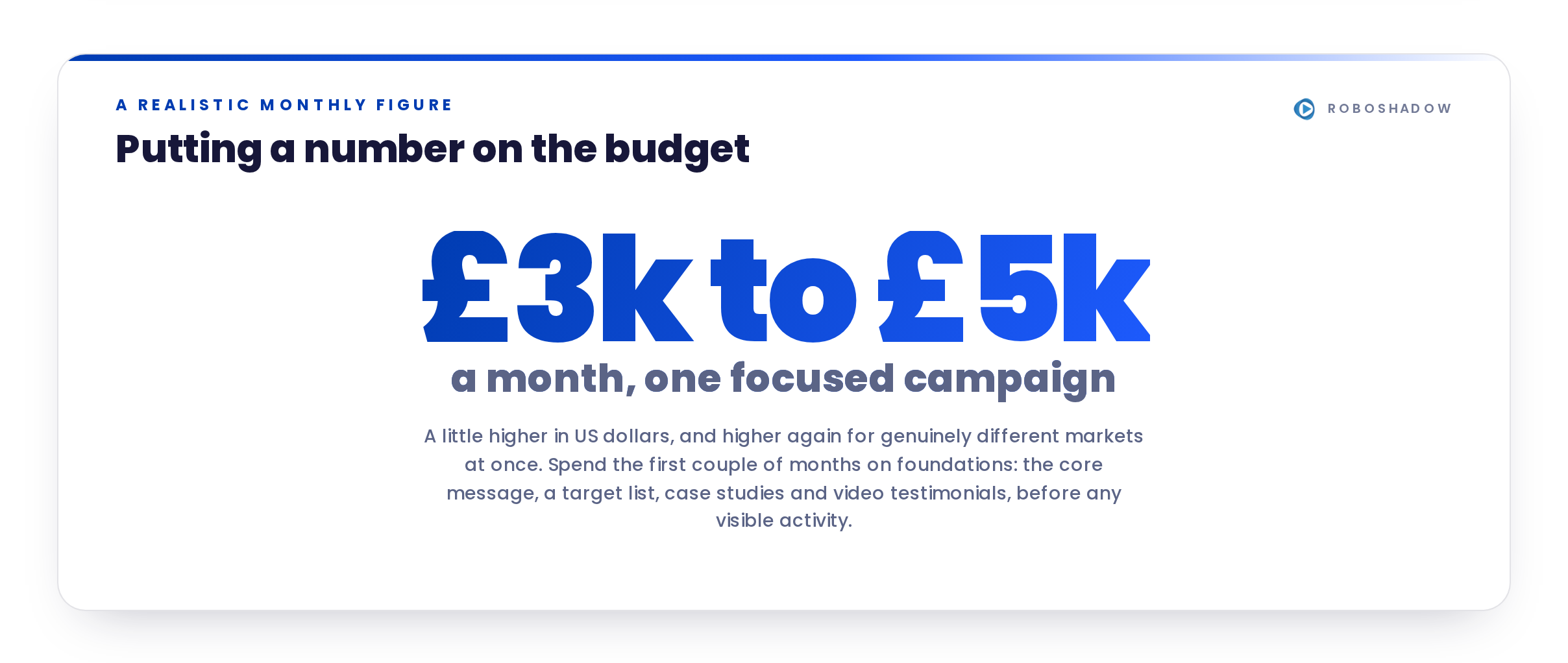
Dave's working figure for a typical MSP running a single, reasonably focused campaign is somewhere between £3,000 and £5,000 a month, adjusted slightly upward for US dollar equivalents, and higher again if a business is trying to serve genuinely different markets, such as small businesses and mid-market co-managed IT, at the same time. He recommends spending the first couple of months of that budget on foundations rather than visible activity: getting the core message right, building a target list, and putting together case studies and video testimonials that give the business something to point to as evidence of its track record.
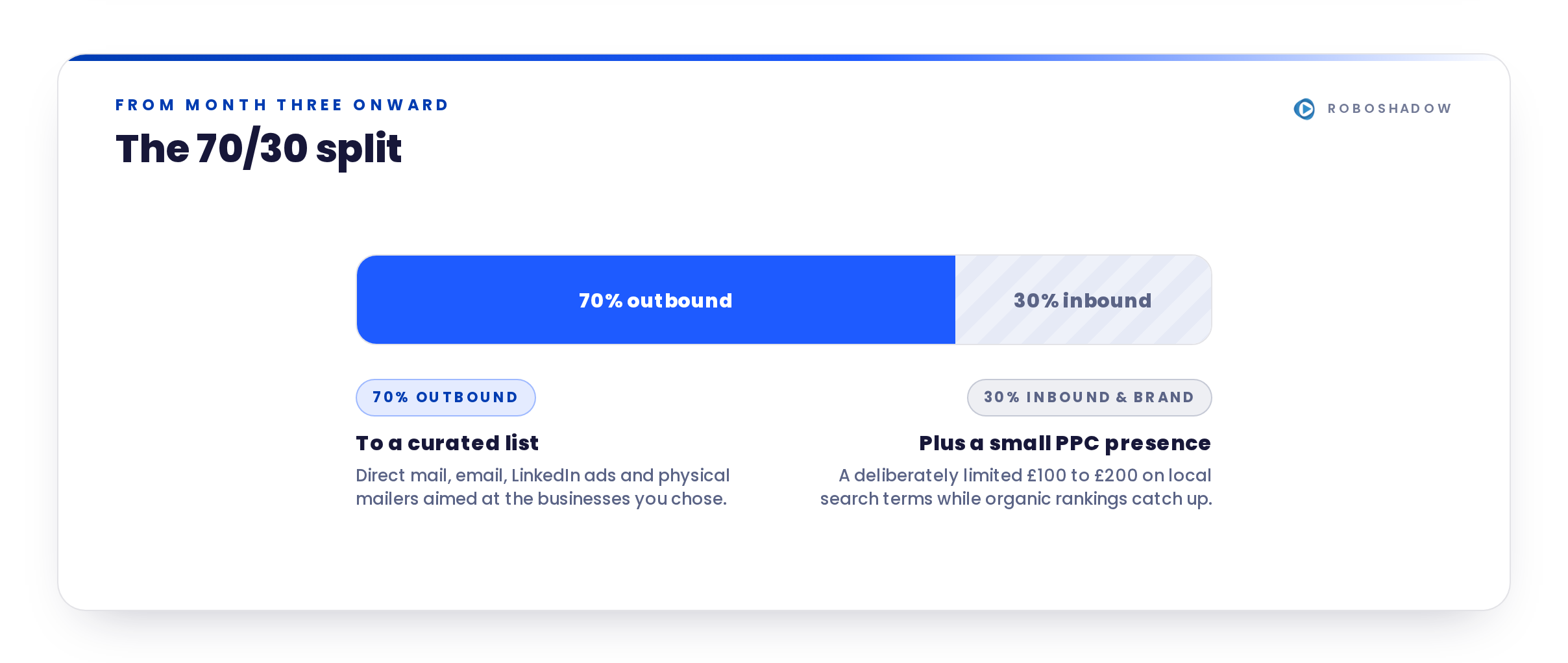
From roughly the third month onward, his rule of thumb is to put around 70% of the budget into outbound activity aimed at that curated target list, whether that's direct mail, email, LinkedIn advertising, or physical mailers. The remaining 30% covers the inbound and brand side, including a modest, deliberately limited pay-per-click budget, on the order of £100 to £200, aimed narrowly at local search terms while organic search rankings catch up. He's candid that Google's own commercial interest in advertising revenue means paid search performance and genuine organic ranking don't always move together the way marketers sometimes claim, and that PPC campaigns need a tight list of negative keywords and a weekly review of the actual search terms triggering the ads, since a meaningful share of that data isn't visible in the platform's own reporting.
LinkedIn's paid advertising plays a different role in his model. Because a LinkedIn audience hasn't shown any active buying intent the way someone searching Google has, Dave finds LinkedIn ads work best for promoting something educational, such as a webinar or an in-person event, rather than a direct pitch for services. Uploading a target account list to LinkedIn's matched-audience feature lets that spend stay focused on the same list being reached by email and direct mail. In his experience running event campaigns for clients, LinkedIn ads account for roughly half of total event sign-ups, at a cost that can run anywhere from around £75 to £200 per registration, a number that looks steep in isolation but compares favourably with the cost of keeping a dedicated salesperson on the phones all day for a similar result.
Setting realistic expectations for the list you build
None of this budget planning means much without a defined list of the businesses worth pursuing, generally called the total addressable market (TAM), and Dave thinks most MSP owners overestimate how big that list really is. He walks through the exercise with clients: a business might assume it serves companies from ten seats up to a hundred, but once internal IT staff, budget, and industry fit are accounted for, the realistic sweet spot often narrows to a much smaller band, and a look at the existing client base usually confirms it. If only two clients out of twenty-five actually sit at the size an owner claims to prefer, that's a signal about how rare that profile really is nearby.
Dave also walks through the conversion math that follows from a narrower, more honest list. In his experience, something like a quarter of qualifying conversations turn into real opportunities, and roughly a quarter of those opportunities go on to close, for cold-sourced business rather than referrals. Working backward from a revenue target through those two roughly one-in-four stages tells an MSP how many conversations it actually needs. The harder number sits above that: across a rolling six to twelve month window, only something like 2% to 5% of a well-targeted list will ever engage enough with content or outreach to start a conversation in the first place. Doubling down on a single industry vertical, or building separate campaigns with tailored messaging for different verticals, is one of the more reliable ways Dave has seen that engagement rate move from the lower end of that range toward the upper end.
.png?width=2416&height=1042&name=msp-cost-v3-conversion-math%20(1).png)
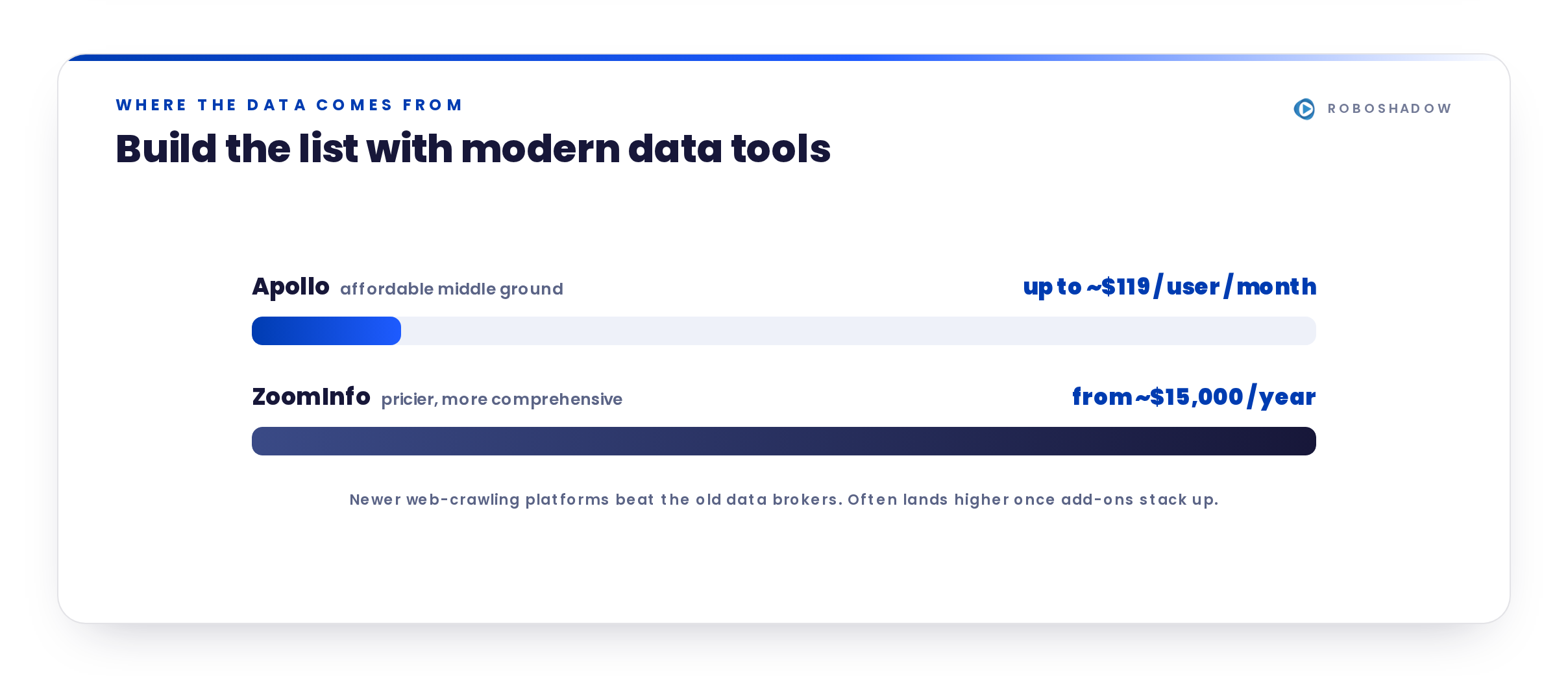
Building the list itself, in his experience, is better done through newer, web-crawling B2B data platforms than the older data brokers that dominated the category before software-as-a-service took over. He named Apollo and ZoomInfo as the two most common choices, with ZoomInfo positioned as the more expensive, more comprehensive option and Apollo as the more affordable middle ground. Current pricing bears that out broadly: Apollo's paid plans run up to around $119 per user per month, while ZoomInfo's contracts typically start near $15,000 a year and often land considerably higher once add-ons are included. A purchased list, in his view, is only ever a starting point. It tells a business who exists and who fits, not who's actually interested, and turning that raw data into something usable still takes a person doing real research, layering in signals such as a recent leadership change at a target company that might make this a sensible moment to reach out.
A related category of tool, website visitor identification software, tries to close some of that gap by matching a visitor's IP address against a database of known business networks. Lead Forensics, the UK company Dave uses, describes itself as the original pioneer in that category, having built what it calls the largest proprietary database of identified business IP addresses in the space. Dave is honest that no single tool catches everything. Testing several of these platforms side by side on the same website traffic, he's found each one spots a different, only partially overlapping set of visiting companies, which is why he tends to combine two or three and de-duplicate the results rather than trusting any one alone. He shared a cautionary story about a colleague reaching out to an MSP whose website had shown up in the tracking data, only for the MSP's owner to react angrily and deny that anyone from his firm had visited, before emailing an apology two days later once he realised it had been his wife, who handles the company's marketing.
Bringing in help without giving up the responsibility for growth
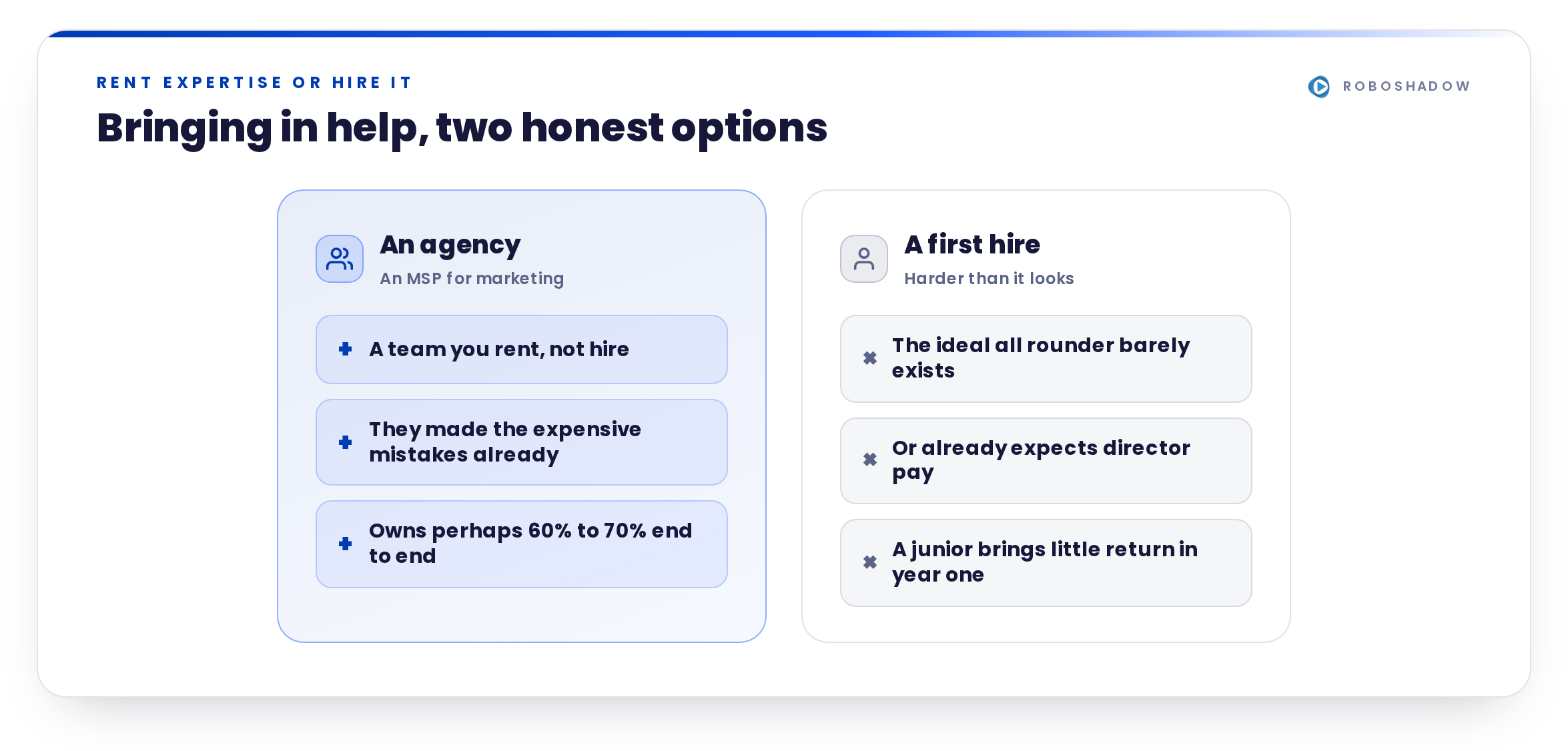
The last question Terry raised was where to get support if a business doesn't have the time, money, or appetite to build a marketing function itself. Dave's framing is that a marketing agency is, in effect, an MSP for marketing: a team a business rents access to instead of hiring outright, made up of people who've already made most of the expensive mistakes so a client doesn't have to repeat them.
His honest view of the alternative, hiring internally, is that the ideal candidate for a first marketing hire is close to non-existent. Someone with two or three years of B2B marketing experience, still willing to do hands-on work, but with enough strategic judgment to guide an owner who may not have much of a marketing background themselves, tends to either not exist in the local candidate pool or already expect director-level pay once they have that combination of skills. A cheaper junior hire, often an apprentice in the UK market, can be useful for the kind of steady brand-building content that doesn't need much strategic direction, but Dave is clear that nobody should expect meaningful return on investment from that kind of hire in the first year or so, in the same way nobody would expect it from a first-year apprentice on the technical side of the business.
Whichever route an MSP takes, Dave's closing point is that outsourcing marketing doesn't mean an owner gets to stop being responsible for growing the business. Even a full-service agency handling most of the funnel, in his estimate, can only own perhaps 60% to 70% of it end to end. Someone inside the business still has to build the actual relationship with a prospect, sit in the room for the technical conversation, and close the deal, because that part of the job can't be fully handed to an outside party no matter how good they are at everything that leads up to it.
Taken as a whole, the three conversations in this series point to the same underlying idea: growth in the MSP world depends on the numbers, the people, and the messaging all pointing at the same target, worked out with enough patience to let each piece do its job before judging whether any of it is working.
As always, we thank you for your ongoing support and feedback, and if you have any questions, please don’t hesitate to reach out to us at hello@roboshadow.com.
We'd also love to get your thoughts on this topic, so if there's anything you'd like to add or challenge, just email us at zaimalalmahomed@roboshadow.com or terrylewis@roboshadow.com - it's always a treat to hear back from you when we put out content like this.
