
Most MSPs that feel let down by marketing actually have a sales gap further back . That's the starting point of a conversation between Terry Lewis, CEO of RoboShadow, and Dave Sutton, founder of the marketing agency Wingman, built exclusively around managed service providers (MSPs).
Across a wide-ranging conversation, they cover what a realistic MSP sales-and-marketing funnel looks like, why outbound generally has to lead where referrals alone can't, and how to work out what a customer is actually worth before spending money to find one. This page holds the full video, a chapter-by-chapter breakdown, and the three-part written series that goes deeper on each theme.


Terry spent years growing 3Gi Technology, his managed service provider, to around £10 million in turnover, long before RoboShadow came along. Dave, meanwhile, built his career inside the MSP industry before launching Wingman after recognising that many providers needed a more effective approach to sales and marketing.
Watch the Conversation
Key Takeaways
- Growth starts with sales, not marketing. Most MSPs that feel let down by marketing actually have a gap further down the pipeline.
- Set the numbers first. Know what a single seat is worth per year before you spend anything on getting found.
- Being the face of the business and closing every deal are two different jobs. You can hand off a good chunk of the second without giving up the first.
- Most of your market is not looking for a new IT provider right now, which is why outbound has to lead and referrals alone will never be a growth strategy on their own.
- AI has become one of the few topics a business owner actively wants to learn about before they've even identified a problem, which makes it an unusually good way to start a cold conversation.
- Stop pricing "leads" and start thinking about the cost of acquiring a customer against what that customer is worth over the years they stay with you.
Podcast Chapters
|
Timestamp |
Topic |
|
01:51 |
How do you approach sales? |
|
03:45 |
Bringing prospects through the cycle of who, how, what, why |
|
05:18 |
How do you shape a sales target? |
|
07:57 |
Biggest challenge as a CEO: recruiting a sales leader |
|
14:31 |
Why is sales seen as an “icky” job title in the UK? |
|
18:59 |
Where’s the success point after hiring a sales leader? |
|
22:36 |
Excuses and horror stories with sales leaders |
|
31:41 |
Common structures for sales leader salary or commission |
|
37:26 |
Managing cold, top-of-funnel leads |
|
48:37 |
Business and technology alignment |
|
52:01 |
SIEM and SOC |
|
1:04:29 |
Dave’s inbound and outbound strategy |
|
1:11:10 |
ROI on inbound vs outbound leads |
|
1:25:38 |
Don’t change systems that are already working |
|
1:32:26 |
How Do You Define Your Ideal Customer Profile (ICP)? |
|
1:44:17 |
Marketplaces for buying lead lists |
|
1:50:09 |
Top tools for tracking everything |
|
1:53:42 |
Server-side Google Analytics |
The MSP Growth Playbook: Three Deep-Dive Articles
This conversation is the basis for a three-part written series going deeper on the sales, funnel, and cost themes above. Each part is linked below.
1. Why Most MSPs Fail At Marketing
The sales groundwork that has to be in place before you spend a penny on marketing. Covering:-
Marketing and sales were never designed to work together
- Set the target before spending anything
- Being the face of the business isn't the same as closing every deal
- Growing a salesperson from inside the business
- Hiring a salesperson from outside
- Paying for performance without breaking the model
2. How MSPs Get Found: Referrals, the Funnel, and the AI Opening.
How referrals really work, how the funnel fits together, and why AI is such a strong way in. Covering:
-
Referral programmes rarely do what people hope
- Matching effort to where a prospect sits in the funnel
- What separates inbound from outbound, and why outbound has to lead
- Why AI has become an unusually good conversation starter
- Turning curiosity into a paying relationship
3. What MSP Marketing Really Costs: CAC, Budgets, and Bringing in the Right Help
The numbers behind all of it, and how to get help without giving up control. Covering:
- Why "cost per lead" is close to a meaningless number
- Working out what a customer is worth
- The acquisition shortcut
- Putting a number on the monthly marketing budget
- Setting realistic expectations for the list you build
- Bringing in help without giving up the responsibility for growth
Start with sales, not marketing
The conversation does not open where you might expect. Before campaigns, channels, or content, Dave wants to talk about sales, because many MSP owners blame marketing for problems that sit further down the pipeline. His point at 01:51 is that the friction between sales and marketing is not unique to MSPs. The two functions have usually run separately, with separate goals, and the walls are only now coming down because both sides are chasing the same three outcomes: new customers, retained customers, and upsells to the people already on the books.
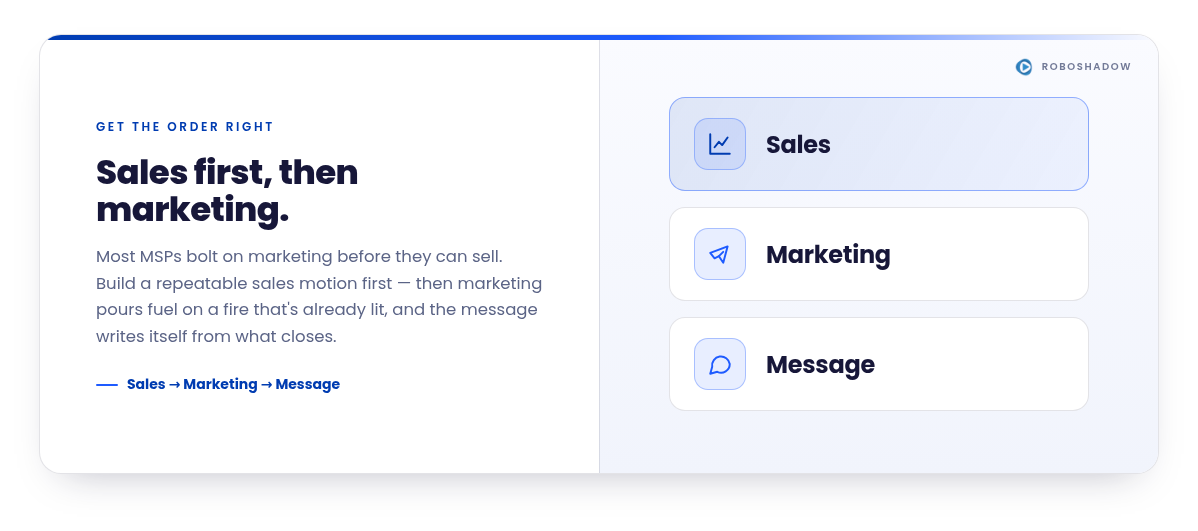
For most owners, sales means one comfortable process: a referral comes in, trust already exists, and the job is to put the right proposal in front of the right person. That model works, and it has built plenty of good MSPs. The trouble starts when an owner adds proactive marketing on top, because a cold prospect has not answered the question a referral answers for you: why switch, and why switch to you? Closing that gap is the work, which is why Dave insists the numbers come first (05:18). Know what a single seat is worth each year, and the whole picture changes, because MSPs do not really win customers; they win seats, and ten clients with 10 seats each carry a very different risk and workload profile from one 100-seat client.
He also draws a line that many owners miss (around 09:00): being the visible personality of the business is not the same job as closing every deal. An owner is usually best placed to speak, write, and build a following, but much of the trust that creates can transfer to whoever the prospect speaks to next. That opens the door to growing a salesperson from inside the business, often someone already having the right conversations on the help desk, and to thinking properly about how you pay them (31:41) without breaking a model built on long, consultative sales cycles rather than box-shifting.
The full detail, including hiring red flags and commission structures, is in part one of the playbook.
How MSPs actually get found: referrals, the funnel, and the AI opening
Referrals should remain the strongest source of new business, because a referred prospect arrives warm and closes faster, but they are a by-product of running a decent business rather than a strategy you can dial up on demand.
Formal referral incentives rarely move the needle. What does seem to lift referral rates is plain visibility: showing up on LinkedIn, producing content, and building a personal brand around the people in the business, because the decision to switch MSP is largely emotional and it is easier to feel something for a person than for a company name. That is MSP lead generation in the real world: slower, warmer, and driven by trust.
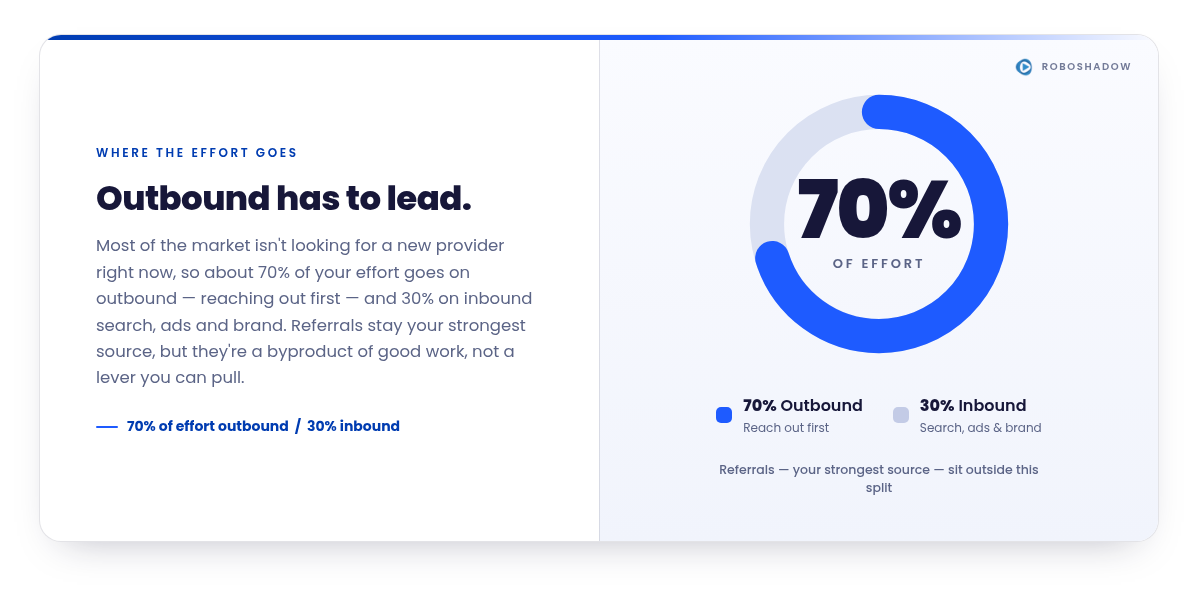
From there the conversation gets into the MSP sales funnel (1:04:29) and the difference between inbound and outbound. Inbound is when someone finds you, whether through search, a paid ad, or increasingly an AI assistant recommending local IT firms. Outbound is you reaching out first. Dave's central argument is that most businesses in your target market are not looking for a new provider at any given moment, so inbound alone will always leave most of your addressable market untouched. That is why he weights roughly 70% of effort toward outbound, aimed at the people who are not searching but who tend to be the stickier, more valuable clients once you land them.
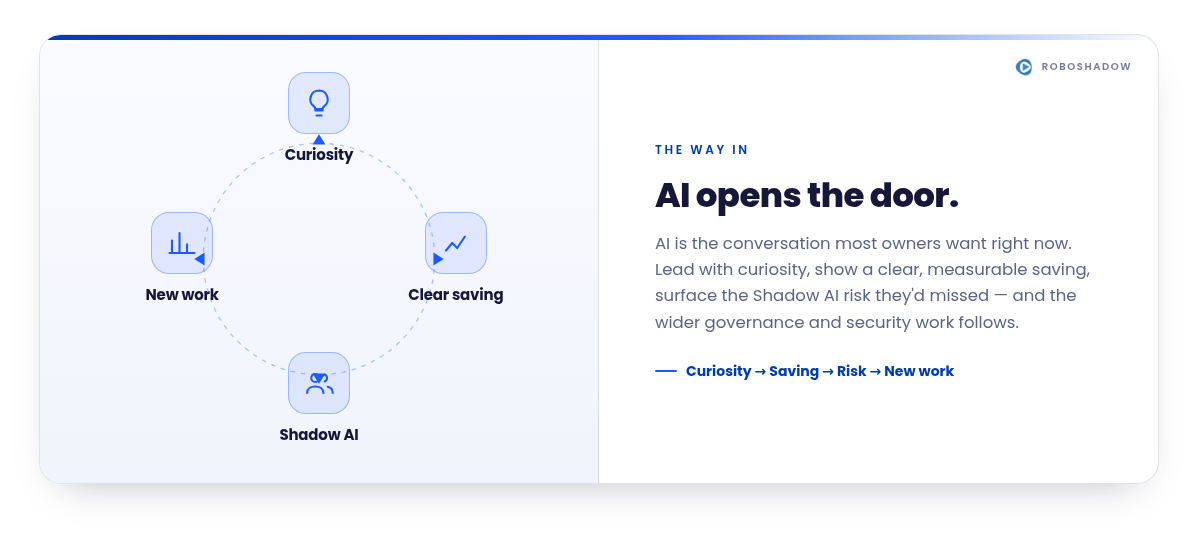
The most interesting opening right now is AI (48:37). For MSPs, AI is a rare opening. Most owners want to understand AI before they have identified the exact problem it solves, which is a useful position for a buyer. You do not have to be an AI expert to lead that conversation, because almost nobody is one yet. What you already have is a working knowledge of how your clients operate, which is exactly what lets you point to a concrete, measurable saving. That conversation tends to loop straight back to security (52:01), because once an owner sees what AI can do, the next question is what their staff are already doing with it unsupervised. Terry's day job at RoboShadow gives him a clear view of how quickly shadow AI has moved from a niche worry to a mainstream client concern, and at 3Gi both threads, AI enablement and AI governance, became one of the biggest sources of new growth.
Part two of the playbook goes deeper on the funnel, the shadow AI numbers, and how to turn event curiosity into a paying relationship.
What MSP marketing really costs: CAC, Budgets, and Bringing in the Right Help
The part most owners find hardest to pin down is money, and Dave is blunt about the first trap (1:11:10): if anyone offers to sell you a fixed price per lead, walk away. Genuinely warm leads take real time and money to build, so a fixed unit price almost always means the same list is being sold to several MSPs at once. He would rather drop the word lead altogether and think about relationships at different stages of warmth, which is a more honest description of what happens between a first cold touch and a signed contract.
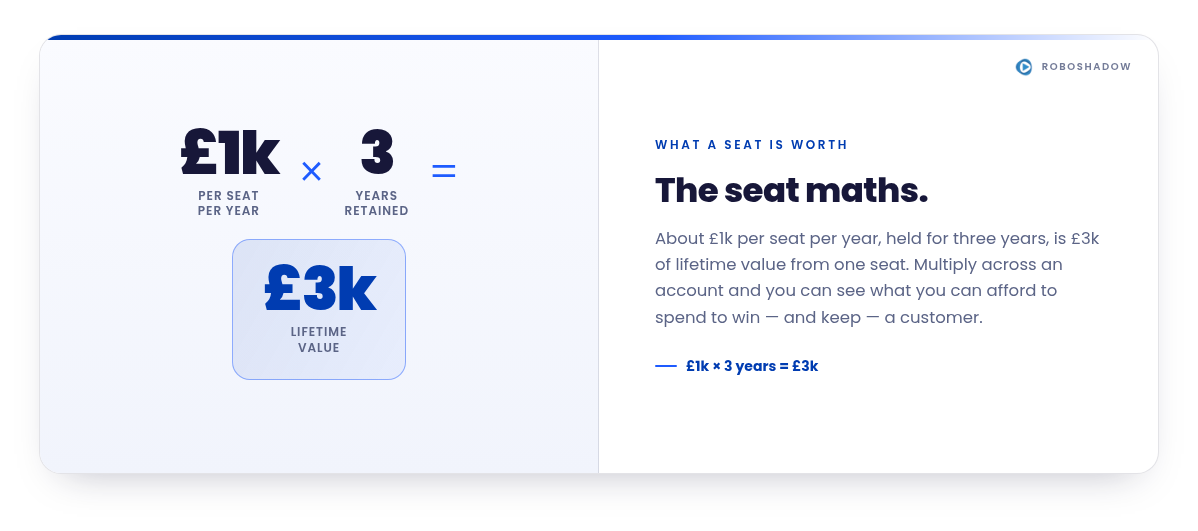
The number that actually matters is the cost of acquiring a customer against what that customer is worth over the years they stay. If a seat is worth around £1,000 a year and you use a conservative three-year retention, that seat is worth roughly £3,000, and Dave argues you should be comfortable spending up to double the lifetime figure to win it in the first place.
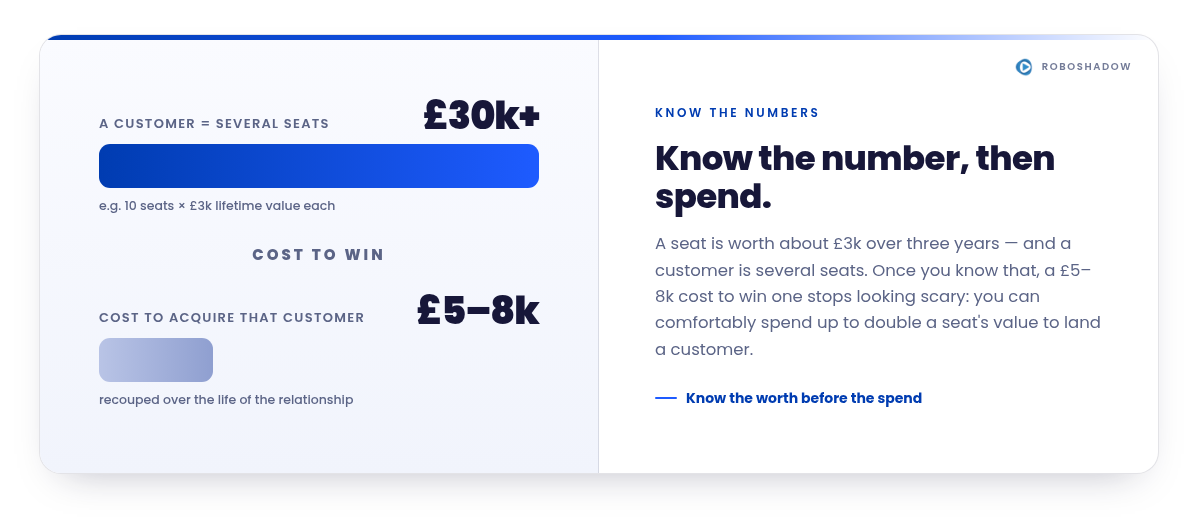
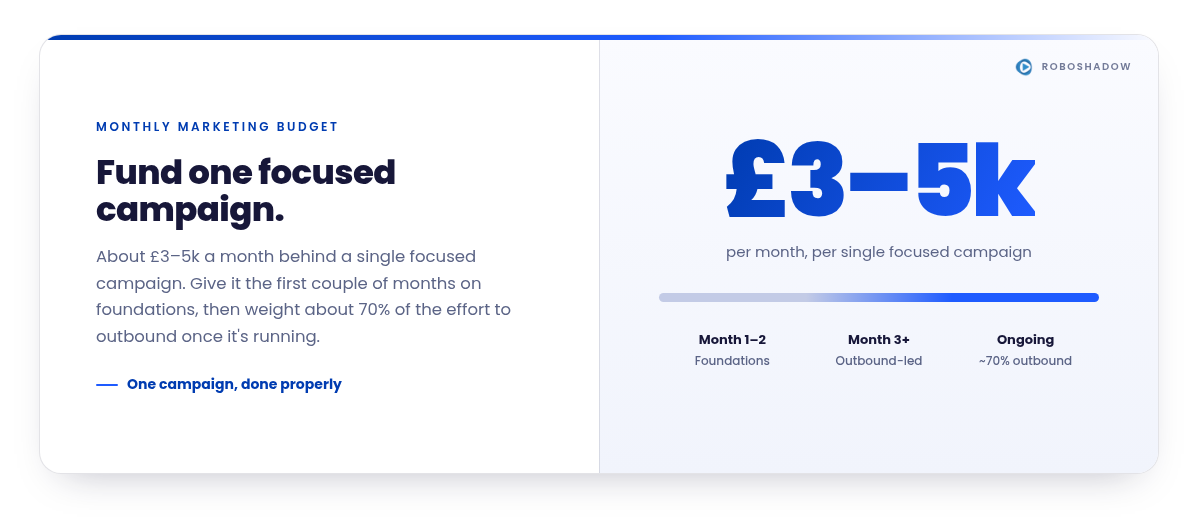
Owners are often startled by acquisition costs of £5,000 to £8,000, mostly because they have never worked out what a customer is worth to them, so any figure sounds expensive without that reference point. As a working budget, he points to somewhere between £3,000 and £5,000 a month for a single focused campaign, with the first couple of months spent on foundations, then about 70% toward outbound once things are running.
The last piece is who does the work (from 1:32:26 onward, through ICP, list buying, and tooling). Defining a realistic ideal customer profile usually shrinks the target market more than owners expect, and buying a list from a platform like Apollo or ZoomInfo is only ever a starting point that still needs a person adding real intelligence to it. Whether you hire in or bring in an agency, Dave's closing point is the one worth holding onto: outsourcing marketing never means outsourcing responsibility for growth, because building the actual relationship and closing the deal still has to come from someone inside the business.
Part three covers the full budget breakdown, the LTV to CAC maths, the acquisition-versus-organic debate, and what to look for in outside help.
Tools Mentioned in This Episode



- Apollo: a B2B contact and list-building platform, with paid plans running up to around $119 per user per month.
- ZoomInfo: a similar list-building platform, generally positioned as the pricier, more comprehensive option, with contracts typically starting near $15,000 a year.
- Lead Forensics: a UK-based website-visitor identification tool that matches anonymous site traffic back to company names. Leadfeeder and LeadInfo were named as similar tools in the same category.
Frequently asked questions
How do MSPs grow?
Sustainable MSP growth comes from getting sales, marketing, and messaging pointed at the same target, in that order. Most growth still starts with referrals and a strong sales foundation, then adds proactive outbound marketing to reach the larger share of the market that isn't actively looking to switch provider.
Should an MSP owner do their own sales?
The owner is usually the best person to be the visible face of the business, but they do not have to close every deal. A large part of the trust an owner builds by speaking and publishing can transfer to someone else in the business who handles outreach and early-stage conversations.
Is inbound or outbound better for MSPs?
Both matter, but outbound generally has to lead. Most businesses are not searching for a new IT provider at any given moment, so relying on inbound alone leaves most of the market untouched. A common split is around 70% of effort on outbound to a curated target list, with the rest on inbound and brand.
How much does it cost to acquire an MSP customer?
It varies, but a cost of acquisition somewhere between £5,000 and £8,000 per customer is realistic. The figure only makes sense against lifetime value: if a seat is worth about £1,000 a year and clients stay for several years, that acquisition cost is recouped over the life of the relationship.
What's a realistic monthly marketing budget for an MSP?
For a single, focused campaign, somewhere between £3,000 and £5,000 a month is a sensible working figure, higher if you are serving genuinely different markets at once. Expect the first couple of months to go on foundations rather than visible results.
Why is AI a good conversation starter for MSPs?
Because most business owners want to understand AI before they've identified a problem it solves, which is unusual for a buyer. That gives MSPs a way to start a conversation without first convincing someone they have a problem, and it leads naturally into governance and security work most MSPs are already equipped to handle.
You can watch the full conversation above, jump to any chapter following the timestamps in the table, and read further in the written series.
As always, we thank you for your ongoing support and feedback, and if you have any questions, please don’t hesitate to reach out to us at hello@roboshadow.com.
We'd also love to get your thoughts on this topic, so if there's anything you'd like to add or challenge, just email us at zaimalalmahomed@roboshadow.com or terrylewis@roboshadow.com - it's always a treat to hear back from you when we put out content like this.
